

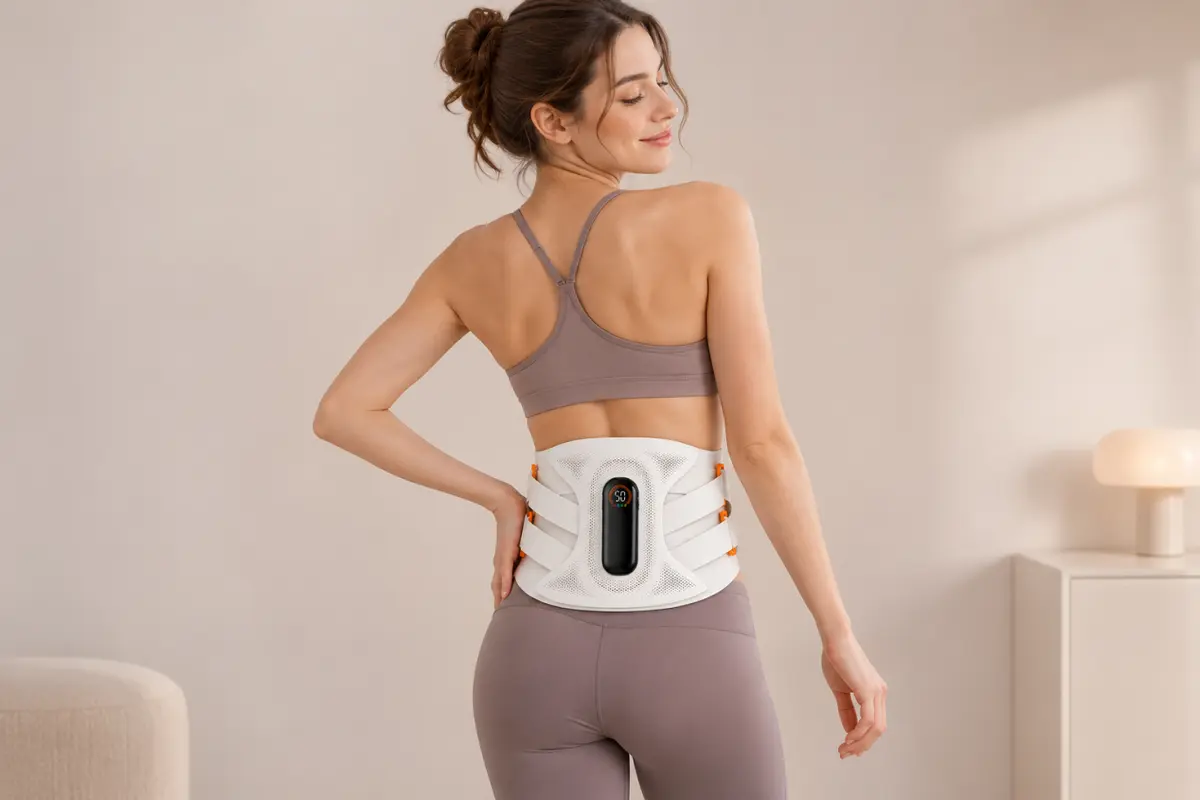
Red light waist massagers combine targeted light-based therapy with mechanical massage, making them a convenient addition to everyday self-care routines. According to the Global Burden of Disease (GBD) study, approximately 619 million people worldwide experienced lower back pain in 2020, and this number is projected to continue rising by 2050. People who spend long hours sitting at desks or maintaining fixed positions are particularly likely to experience lower back discomfort and stiffness.
After a long day, your lower back may feel heavy and tight. Many people dismiss this as normal fatigue and overlook the need for regular care.
Red light waist massagers combine photobiomodulation (PBM) with mechanical massage, offering an additional approach to everyday lower back relaxation.
1. Why Does Lower Back Care Deserve More Attention?
1.1 The Physical Demands on Your Lower Back
The lumbar spine supports the upper body and distributes weight. Sitting, bending, or standing for long periods keeps the lower back muscles working to maintain stability. Prolonged static postures can cause muscle tension, stiffness, and persistent tightness that occasional movement may not fully relieve.
1.2 Physical Discomfort Associated with a Sedentary Lifestyle
Prolonged sitting can leave your lower back stiff and heavy, sometimes making movement uncomfortable. Taking regular breaks to move and relax can help reduce the strain of sitting for long periods.
1.3 An Often-Overlooked Part of Everyday Self-Care
Many people prioritize sleep, nutrition, skincare, and exercise but overlook lower back care. Don’t wait for stiffness to become persistent. Make lower back relaxation part of your wellness routine to support everyday comfort.
2. What Makes Red Light Waist Massagers Different?
2.1 The Limitations of Traditional Massage Alone
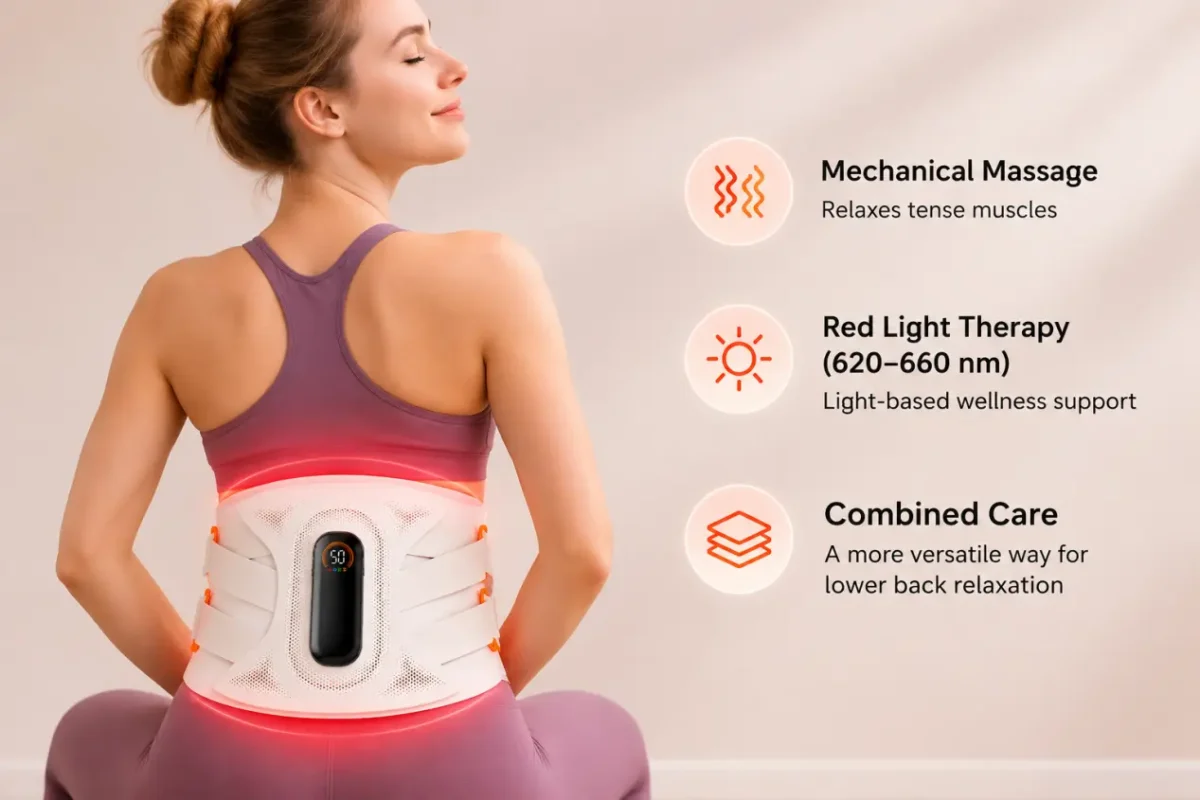
Traditional waist massagers use kneading, vibration, or percussion to relax lower back muscles. While the relief may be temporary, combining mechanical massage with light-based technology offers a more versatile home wellness experience.
2.2 How Red Light Technology Works
Home-use red light devices commonly use wavelengths of 620–660 nm. Through PBM, specific wavelengths interact with biological tissues and may influence cellular activity. Unlike heat therapy, red light works through light-tissue interactions. Some devices combine both technologies for a more versatile relaxation experience.
2.3 How Red Light and Mechanical Massage Work Together
Mechanical massage uses vibration and kneading to stimulate muscles, while red light adds a light-based component. Combining both features in one device allows users to adjust their experience based on personal preferences and comfort levels.
For example, modern red light waist massagers combine light-based technology with wearable massage features, offering a convenient option for everyday home wellness routines.
Rather than relying entirely on strong mechanical pressure, this combination offers a more versatile approach to everyday lower back relaxation.
2.4 Red Light vs. Green Light: Understanding the Differences
Red and green light serve different purposes. Red light is more commonly used in waist massagers designed for body-focused photobiomodulation (PBM).
| Comparison | Red Light (620–660 nm) | Green Light (520–560 nm) |
| Light penetration | Generally penetrates deeper into tissue than green light | More strongly absorbed near the skin surface |
| Main mechanism | Associated with photobiomodulation and cellular light responses | Used in various skin-focused and visual applications, depending on the device |
| Common applications | Red light wellness devices and certain muscle-related applications | Some skincare and visual wellness products |
| Suitability for waist massagers | Commonly used in red light waist and body massage devices | Less commonly used in waist-focused massage products |
3. When Should You Use a Red Light Waist Massager During the Day?
3.1 During a Midday Break After Sitting for Long Periods
After a morning at your desk, use your lunch break to relax. A 10–15-minute session, following the manufacturer’s instructions, can fit into your midday routine. Choose a gentle massage setting to unwind without excessive stimulation.
3.2 After Work: A Chance to Unwind
After a full day of work, relax on the sofa with a waist massager. Starbright offers wearable red light waist massagers designed for convenient home use, making them a practical addition to your daily relaxation routine.
3.3 Before Bed: Gentle Lower Back Relaxation
Evening is a convenient time to use a waist massager as part of your self-care routine. Choose a low-intensity setting to relax before bed, and avoid strong massage or excessive heat, especially if you have sensitive skin.
4. How Can Red Light Waist Massagers Complement Other Wellness Habits?
4.1 Combine It with Gentle Stretching
Combine red light massage with gentle stretches such as Cat-Cow or Child’s Pose to maintain flexibility and encourage lower back mobility. Avoid deep or strenuous stretches when your back feels stiff, and always stay within a comfortable range of motion.
4.2 Pair It with Better Daily Habits
Schedule red light massage sessions at a consistent time and take movement breaks every 45 minutes. Maintain good posture and a comfortable workspace. Remember, a waist massager is a self-care supplement, not a replacement for regular movement or healthy habits.
4.3 Combine It with Other Relaxation Practices
Include other relaxation activities in your evening routine, such as a warm foot soak, gentle stretching, or relaxing music after using your waist massager. Combining simple habits can help you unwind without relying on a single product or technique.
5. How to Make Red Light Waist Massagers Part of a Long-Term Wellness Routine
5.1 Find the Right Settings for Your Needs
Start with a low massage intensity and red light setting. Gradually try different combinations, testing each function separately before using them together. Adjust the settings based on your comfort level and skin sensitivity.
5.2 Keep Sessions at an Appropriate Length
Follow the manufacturer’s recommended session time, typically 15 minutes or less if specified. Avoid prolonged use or excessive intensity, and stop if discomfort, overheating, or skin irritation occurs.
5.3 Important Safety Considerations
Follow the recommended session time, typically 15 minutes or less if specified. Avoid excessive use or intensity, and stop if discomfort, overheating, or skin irritation occurs.
